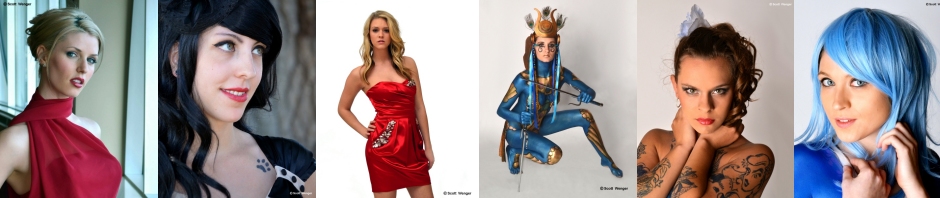
Lighting
Shooting Outdoors
Light can change rapidly outdoors (especially on days that are partly cloudy.) When photographing people outdoors, the best light is on overcast days. On overcast days, you don't have to wait for a cloud to pass between the sun and the ground. A cloud will diffuse sunlight and that softer light is much more flattering to the person being photographed than direct sunlight. I always try to avoid direct sunlight because direct sunlight causes dark shadows on the face and, in my opinion, is the absolute worst light for photographing people. Sure, there are ways to diffuse direct sunlight but that often involves extra equipment such as fabric stretched over a frame (and sometimes an assistant to hold whatever is being used to diffuse the direct sunlight.) When shooting outdoors on overcast days, I will sometimes add some artificial light from a flash unit as "fill" light. When shooting outdoors on a cloudless day, I will often ask the model to step into the shade of a tree or the shade of a building to avoid the problem of direct sunlight.
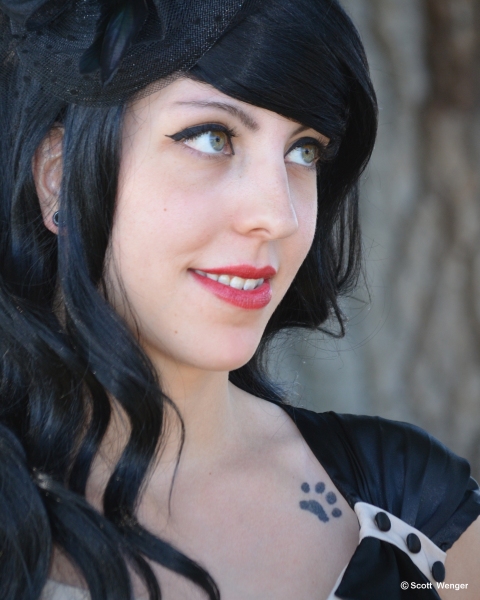
The image of the woman on the left was taken on a bright sunny day. However, to avoid the harshness and dark shadows caused by direct sunlight, I photographed her in the shade of a large tree. In fact, you can see the trunk of the tree in the background of the picture. I used a long lens and photographed her from about 30 feet away. I filled the frame with her face. No editing was required and this photograph is "straight out of the camera."
Shooting Indoors
When shooting indoors, I usually bounce light from a studio flash unit and then force the bounced light to pass through white fabric before reaching the model to get the "softest" light possible. I have also positioned models next to windows indoors to use the natural light coming through the window. It is possible to mix artificial light and natural light indoors by using sunlight coming through the window mixed with some artificial light from a flash. As I said, I will usually soften the artificial light in some way — even with something as simple as a "Gary Fong" diffuser attached to the flash unit and use that softened light as "fill" light indoors.
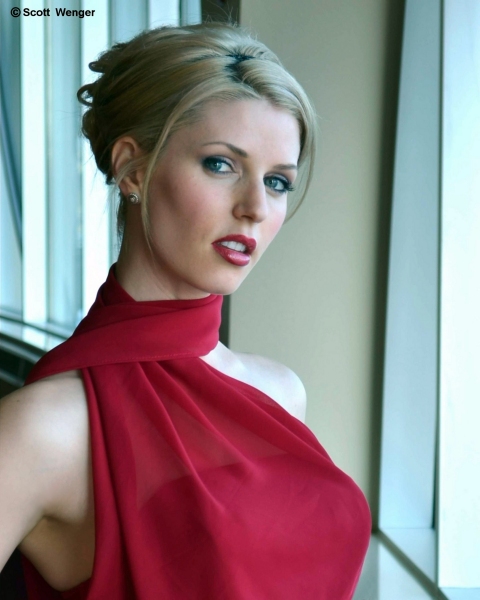
The image on the left is an example of mixing natural light with artificial light. I asked the model to stand near some large windows so that I could use the natural light streaming through the window. Then, I used a "Gary Fong" diffuser attached to my flash unit as "fill light" for the model's right side.
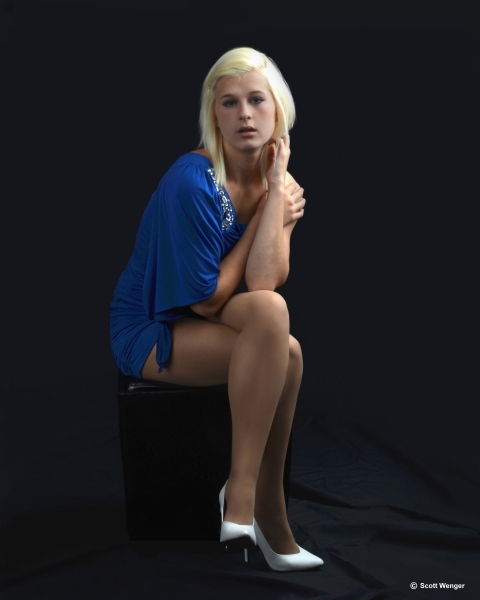
In the image on the left, the model (Brittany) is sitting on an ottoman in a very nice pose. A black backdrop with a rod pocket was hung near the ceiling between two stands. The extra material at the bottom of the backdrop was brought forward on the floor. A studio flash unit was used as the main light source, very close to Brittany's left side. A large reflector was held on Brittany's right side to bounce light from the studio flash onto the right side of her body. The background appears black because a narrow aperture was used and no light was aimed directly at the black backdrop.
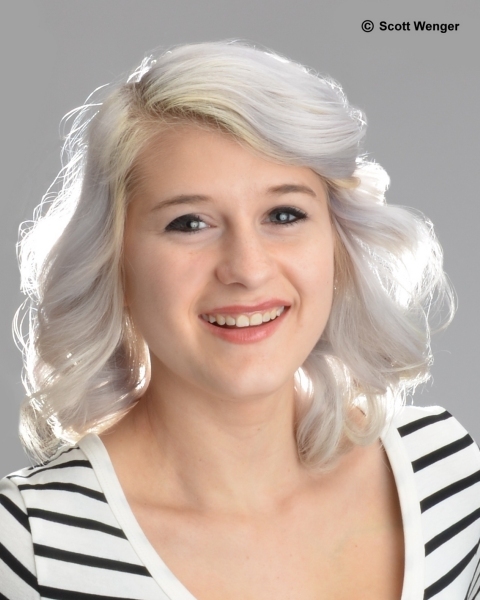
The image on the left is an example of backlight. The model (Brittany) is standing in front of a seamless backdrop. The main light source was a studio flash unit to the right of the camera and that main light was aimed at her face. A second strobe light was positioned directly behind Brittany's head and was flashed at high intensity to create a halo effect around her hair. The resulting image (as you can see) is very bright.
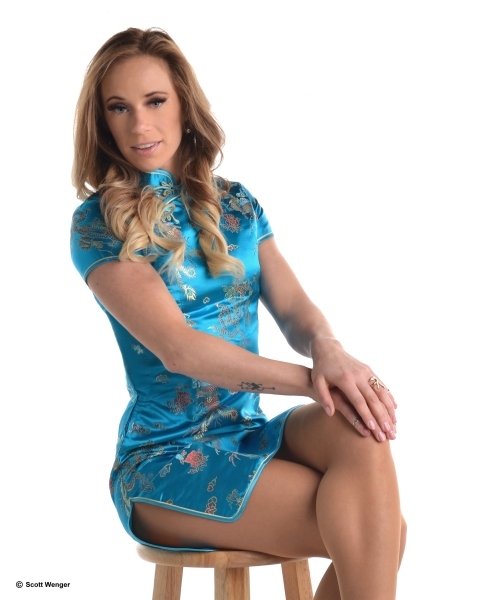
In the photo on the left, model Nat Walstead is sitting on a wooden stool in front of a cyclorama that was painted white. A 3-light set-up was used. Two lights were aimed at the background. The main light was to the right of the camera and consisted of a strobe light bounced into a large umbrella. The bounced light was then passed through white fabric to diffuse the light before reaching the model. The background is completely white.
For shooting indoors, I purchased lighting equipment (including AlienBees studio flash units, light stands, parabolic umbrellas, and other lighting equipment) from the Paul C. Buff company in Nashville, Tennessee. It's a good company. Here is a link to their website: http://www.paulcbuff.com/
All images © Scott Wenger. All rights reserved.